
Invisalign in Austin, TX

Straightening your teeth as an adult used to mean committing to a mouthful of metal for a couple of years. Invisalign changed that math, and it's why so many of our patients who assumed they'd missed their window are now finishing treatment.
Dr. Bhavani Sriramaneni, DMD, offers Invisalign at our Austin office, and if you've been searching for a dentist near you who can handle clear aligner treatment alongside your regular dental care, you're in the right place. One practice, one familiar team, no shuttling between offices.
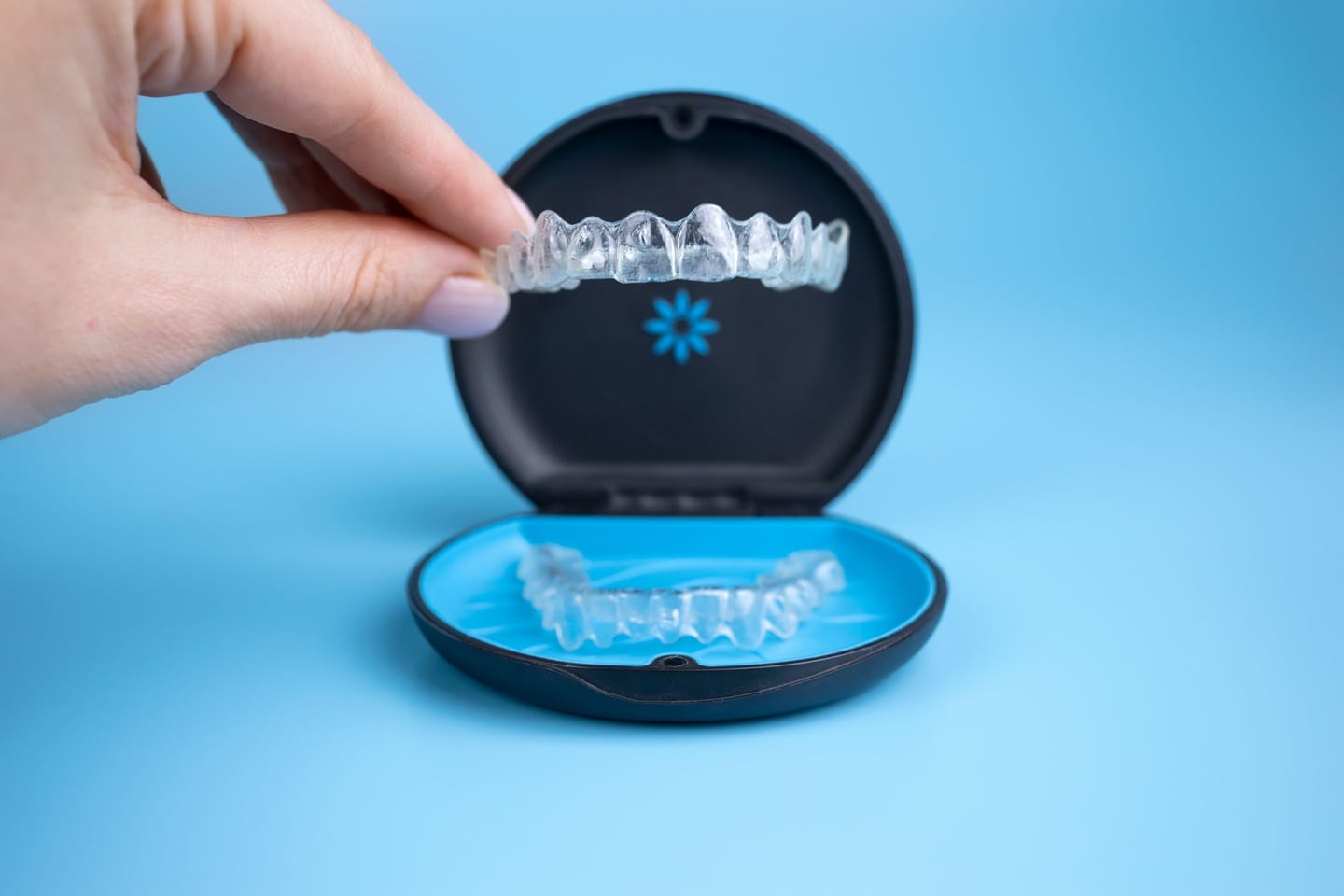
What Is Invisalign?
Invisalign is a system of clear, removable aligner trays that shift your teeth into position gradually. Each set is worn for about one to two weeks before you move to the next, and every tray applies gentle, targeted pressure to a few teeth at a time.
The trays are made of a smooth, BPA-free plastic that's nearly invisible in conversation and in photos. You take them out to eat, drink anything other than water, brush, and floss.
Why Choose Invisalign Treatment?
Faster Treatment
Many patients move to a new set of aligners each week. Your schedule may be adjusted based on how your teeth respond, especially for mature adults.
Proven Technology
SmartTrack® material and SmartForce® features are designed to give the doctor greater control over planned tooth movement.
Better Fit
SmartTrack aligners are made to fit closely, feel smooth, and remain easy to put in and remove throughout treatment.
Versatile Treatment
Invisalign can address many common concerns, including crowding, gaps, open bites, crossbites, overbites, and underbites.
Discreet Appearance
The clear trays are subtle enough that most people will not notice them during ordinary conversation or in photos.
Everyday Comfort
The trays have no brackets or wires and can be removed for meals, brushing, and flossing.
Convenient Check-ins
Progress visits are brief and are often scheduled about every six weeks, depending on your treatment plan.
Is Invisalign Better Than Braces?
"Better" depends on your teeth and your life. Here's an honest comparison:
Where Invisalign wins:
- Far less noticeable! Most people won't realize you're in treatment
- Removable, so you eat normally and clean your teeth normally
- No wire pokes, no broken brackets, fewer emergency visits
- Usually fewer check-in appointments
Where traditional braces still win:
- Better for severe crowding, significant bite correction, and complex rotations
- Nothing to lose or forget: they work whether or not you're disciplined
- Often a lower cost, depending on the case
- Better suited to younger patients who may not wear aligners consistently
The honest caveat with aligners: they only work when you wear them 20 to 22 hours a day. If that sounds like a struggle, braces may genuinely be the better choice, and the doctor will tell you so.
Alternatives to Invisalign
Invisalign isn't the only path to straighter teeth, and it isn't right for every case:
- Traditional metal braces — the most versatile option for complex orthodontic correction
- Ceramic braces — tooth-colored brackets, less visible than metal, still fixed in place
- Other clear aligner brands — similar concept with different systems and pricing
- Mail-order aligner kits — cheaper, but with no in-person supervision. We generally advise against them; unmonitored tooth movement can cause real damage.
- Veneers or bonding — for minor cosmetic concerns only; these change appearance without moving teeth
For cases that fall outside what we can treat well, we'll refer you to a trusted orthodontic specialist rather than stretch the treatment to fit.
What Is the Process for Getting Invisalign?
- Consultation. Dr. Sriramaneni evaluates your teeth, bite, and gum health and talks through whether you're a good candidate.
- Digital scan and custom plan. We use digital scanning technology such as the iTero® system to create precise 3D images, map each planned movement, estimate the timeline, and show you a preview of the projected result.
- Your custom aligners. Your trays are made with Invisalign's SmartTrack® material. Small tooth-colored attachments may be bonded to certain teeth to help the aligners guide specific movements.
- Progress through the sets. You change to a new set of aligners every one to two weeks according to your plan while your teeth move gradually.
- Periodic check-ins. Brief visits, often about every six weeks, let us confirm that everything is tracking as planned and make adjustments when needed.
How Long Do I Need to Wear Invisalign Retainers?
Two different things here, and the distinction matters.
During treatment, you wear your aligners 20 to 22 hours a day. Most cases finish in six to eighteen months, though minor corrections can wrap up faster.
After treatment, you switch to retainers, and this part is permanent. Teeth naturally drift back toward their original positions for years afterward. Expect full-time retainer wear for the first few months, then nightly wear indefinitely. Patients who stop wearing retainers are the ones who end up back in treatment a decade later.
Ask us about a custom Vivera® retainer, which is made using the same digital technology used for Invisalign clear aligners.
See How Invisalign Treatment Works
Watch this short overview of the Invisalign system and the steps involved in clear aligner treatment.
Invisalign and the Invisalign logo, among others, are trademarks of Align Technology, Inc., and are registered in the U.S. and other countries.
Invisalign — Frequently Asked Questions
How long does Invisalign treatment take?
Treatment time depends on how much your teeth need to move, but many adults finish in about 12 to 18 months, and minor cases can be shorter. During your consultation at Apex Dental in Austin, TX, a digital scan lets you preview your projected results and estimated timeline.
How many hours a day do I need to wear Invisalign aligners?
For the best results, wear your aligners 20 to 22 hours a day, taking them out only to eat, drink anything other than water, and clean your teeth. Consistent wear keeps your treatment on schedule.
Is Invisalign as effective as braces?
Invisalign can treat many of the same issues as braces, including crowding, gaps, overbites, underbites, and crossbites. Some very complex cases may still be better suited to traditional braces, and we will give you an honest recommendation after evaluating your smile.
What happens after I finish Invisalign treatment?
Once your teeth reach their final position, you will wear a retainer to keep them from shifting back. Most patients wear it full time at first and then transition to nighttime wear. Wearing your retainer as directed protects your investment for years to come.
Call to Schedule an Appointment Today
The best way to find out whether Invisalign will work for you is a quick consultation. Call Apex Dental at 512-444-3494 to schedule with Dr. Bhavani Sriramaneni, DMD.
 Website Powered by Sesame 24-7™